






Scalable 48V LiFePO4 Rack Batteries — From 5.12kWh to 130kWh+

Low Voltage Solar Battery Storage: 48V LiFePO4 Systems for Home & Commercial Use

RAKOUR low voltage solar battery storage systems deliver 51.2V LiFePO4 performance with plug-and-play inverter compatibility, built-in BMS, and IEC62619 certification.

Home » Products » Low Voltage Batteries

What Is a Low Voltage Battery?

A low voltage battery system operates at a nominal voltage of 48V–51.2V DC, designed to interface directly with standard single-phase residential and light-commercial inverters without requiring a separate HV conversion layer. RAKOUR's LV series uses a 16S1P LiFePO4 cell configuration, producing an operating voltage window of 46.4V–57.6V — the universally accepted range for most low voltage inverter platforms. This architecture keeps system design straightforward and reduces the electrical safety complexity on-site.

Diagram explaining what a low voltage 48V LiFePO4 battery is and how it works in a solar storage system

How LV Differs from HV Architecture

LV systems wire batteries in parallel to scale capacity; HV systems wire modules in series to increase voltage. LV is inherently simpler — no string-level voltage balancing, no HV isolation requirements, and compatible with standard 48V charge controllers out of the box.
48V LiFePO4 battery 16S1P prismatic cell configuration inside a RAKOUR low voltage battery pack

Nominal Voltage, Cell Chemistry & Pack Configuration

All RAKOUR LV units use Grade-A LiFePO4 prismatic cells in a 16S1P configuration. The stable olivine crystal structure of LiFePO4 prevents thermal runaway, making it the preferred chemistry for indoor residential battery storage installations.
Low voltage battery operating voltage window from 46.4V to 57.6V shown on a charge curve diagram

Why 48V Became the Industry Standard for LV Systems

48V is the default bus voltage for single-phase hybrid inverters across Deye, Growatt, Victron, and Solis platforms. It keeps conductor sizing manageable at residential power levels and aligns with standard DC protection device ratings.

48V 100Ah LiFePO4 & 51.2V 100Ah Lithium Battery Product Series

RAKOUR's LV lineup covers four rackable capacities and three wall-mounted options. Every model is built on the same 51.2V LiFePO4 platform, ensuring identical communication protocols and parallel expansion logic across the range.

 
RAKOUR NSTLV wall-mounted LiFePO4 battery 10.24kWh — IP54-rated enclosure for residential garage and outdoor covered installation

NSTLV - 10.2K

10.24kwh | 6000 Cycles | Wall Mounted | IP54
RAKOUR NSTLV-16K wall-mounted LiFePO4 battery 16kWh — highest cycle life in LV wall series at 11,000 cycles with IEC62619 certification

NSTLV - 16K

16.08kwh | 11000 Cycles | Ground Wheel | IP54
RAKOUR 51.2V 200Ah LiFePO4 lithium battery rack module — 10.24kWh usable energy with touch screen display and parallel expansion support

51.2v 200Ah - LV

10.24kwh | 6000 Cycles | Rackable | 15 in Parallel
Advantages of 48V LiFePO4 Battery Systems

RAKOUR LV batteries include a built-in multi-layer battery management system (BMS) that monitors individual cell voltage, pack current, and temperature in real time. Protection logic covers overcharge, over-discharge, over-current, short circuit, and high/low temperature faults — all enforced at the hardware level, not just firmware.


6,000–11,000 Deep Cycle Lifespan at 90% DoD

The 51.2V 100Ah and 200Ah models are rated at ≥6,000 cycles; the 280Ah reaches ≥10,000 cycles; the 314Ah tops ≥11,000 cycles — all at 90% depth of discharge. For a solar installer, this translates to 16–30 years of daily cycling with no capacity guarantee concerns.

Integrated Multi-Layer BMS Protection Logic

The BMS communicates pack status through RS485, CAN, and RS232 ports simultaneously. It handles cell balancing during charging to extend pack lifespan and surfaces alarm data — cell voltage deviation, temperature out-of-range, pack status — via the built-in touch colour screen on the 200/280/314Ah rackable models.

Plug-and-Play Compatibility With Standard Inverters

Each unit ships with pre-configured communication profiles. Installers do not need custom firmware flashing; setting the inverter to Lithium mode and connecting the CAN port to BMS1 is sufficient for Deye single and three-phase units. This cuts commissioning time significantly in the field.

Lower Installation Cost vs. High Voltage Alternatives

LV wiring uses standard DC cables and fusing rated for 48V systems. No HV-rated connectors, no additional isolation requirements. Total installed cost per kWh is lower for systems under 30kWh.

Residential Battery Storage Applications

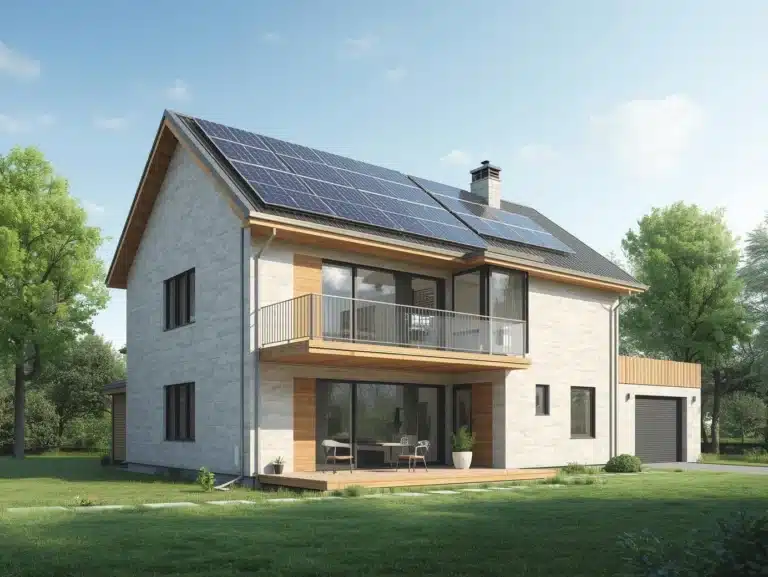
RAKOUR LV batteries are purpose-built for residential battery storage scenarios where space efficiency, inverter compatibility, and straightforward installation matter most. The rackable form factor allows clean cabinet mounting in utility rooms, garages, or purpose-built enclosures.


RAKOUR 48V LiFePO4 residential battery storage system paired with rooftop solar panels for grid-tied self-consumption

Grid-Tied Solar Self-Consumption

Pair the 51.2V 200Ah (10.24kWh) with a Deye or Growatt hybrid inverter to store midday solar surplus and discharge during evening peak hours, directly offsetting time-of-use tariff charges.
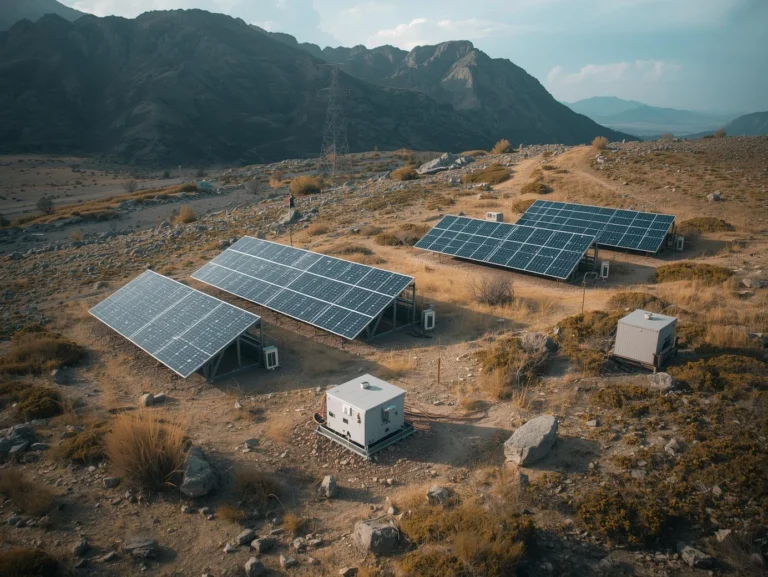
Off-grid home solar battery storage system using RAKOUR 51.2V LiFePO4 rack batteries stacked in parallel up to 15 units

Off-Grid & Hybrid System Deployments

Up to 15 units can be connected in parallel, scaling usable capacity from 4.61kWh (single 100Ah unit at 90% DoD) to over 130kWh in a single LV bank. This makes RAKOUR LV viable for off-grid residential and small farm applications without stepping up to a high voltage architecture.
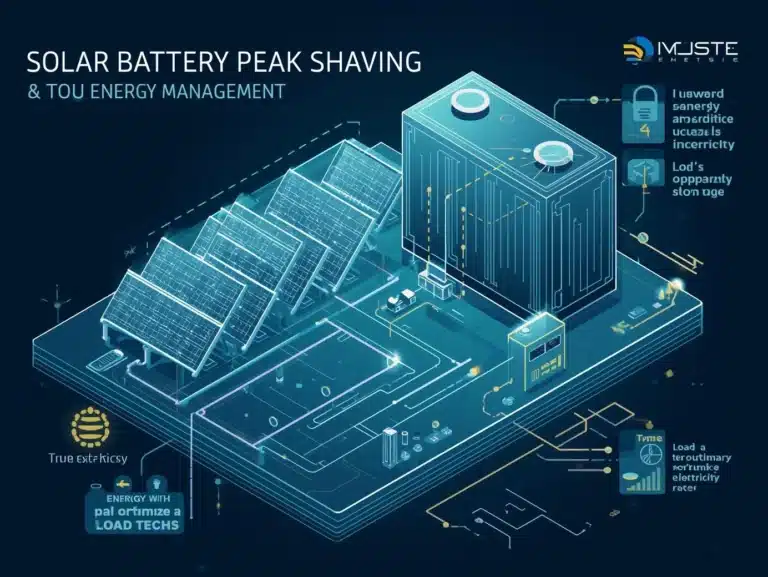
Home energy storage system diagram showing peak shaving and time-of-use energy management with RAKOUR low voltage battery

Peak Shaving & TOU Energy Management

The BMS communicates SOC data to the inverter continuously, enabling accurate charge/discharge scheduling for TOU arbitrage strategies. Installers can configure charge cut-off thresholds and discharge floors directly through the inverter menu.
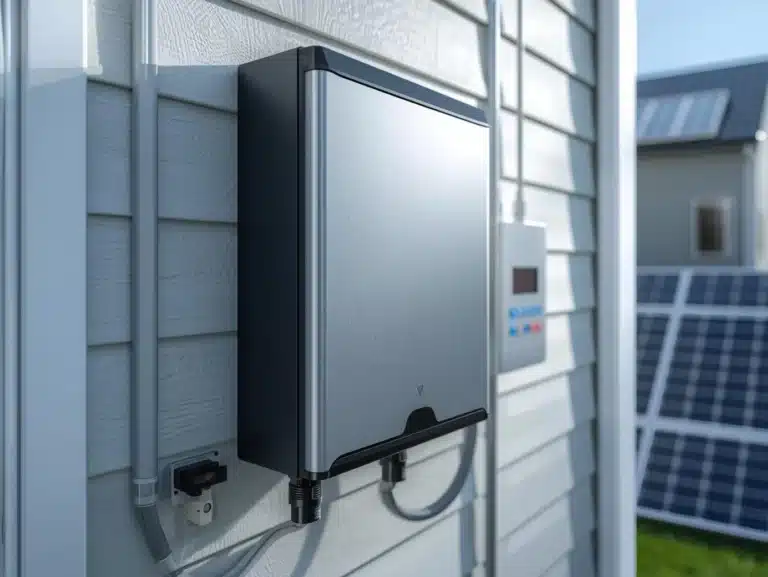
RAKOUR IP54-rated wall-mounted LiFePO4 battery providing emergency backup power for critical residential loads in garage installation

Emergency Backup for Critical Home Loads

The wall-mounted RAKOUR LV series (10.2kWh / 14.3kWh / 16kWh) carries IP54 ingress protection, making it suitable for garage walls or covered outdoor installations where dust and splash exposure is a factor.

How the Server Rack Battery System Works

The RAKOUR server rack battery operates as a DC-coupled energy storage node in a solar battery storage system. The master unit manages all parallel slaves via internal daisy-chain communication, presenting a single SOC value and alarm state to the inverter.


Technical diagram of RAKOUR server rack battery DC coupling architecture connecting 48V LiFePO4 pack to hybrid solar inverter

DC Coupling Architecture Explained

Solar charge flows from the inverter's battery terminals directly into the LV bank at up to 57.6V charge voltage. No AC conversion step occurs, preserving round-trip efficiency. The BMS enforces CV/CC charge logic, tapering current as cells approach full charge.
Wiring diagram showing RS485 and CAN bus communication ports on RAKOUR rack mount battery backup connecting to inverter BMS1 port

RS485 / CAN Bus Communication Protocol

The CAN port connects to the inverter's BMS1 port. RS485 enables integration with energy management systems or remote monitoring platforms. RS232 is available for direct PC-based diagnostics during commissioning.
RAKOUR server rack battery parallel stacking diagram showing up to 15 units sharing a common DC busbar with master-slave BMS logic

Parallel Stacking Logic — Up to 15 Units

All units in a parallel bank share a common positive and negative busbar. The master BMS coordinates balancing across slaves. Current is distributed proportionally to each unit's SOC, preventing single-unit overloading during high-demand discharge events.
SOC calibration and charge strategy configuration screen on a Deye inverter connected to RAKOUR 48V LiFePO4 rack battery system

SOC Calibration & Charge Strategy Settings

SOC is calculated from coulomb counting and cell voltage cross-reference. Periodic full-charge calibration cycles are recommended every 30 days to maintain accuracy. This is configurable directly from the inverter charge strategy menu on Deye-compatible systems.

Compatible Inverters & System Integration

RAKOUR LV batteries carry pre-validated CAN profiles for the most widely deployed inverter brands in residential solar storage globally. For Deye 29.9K–80K series, set battery mode to Lithium, select Parallel Bat1&Bat2, connect CAN to BMS1 — commissioning is complete. No BMS firmware changes are needed.


Generic CAN/RS485 Setup for Third-Party Inverters

For inverters without a native RAKOUR profile, the BMS can be configured to output Pylontech-protocol frames over CAN — the most widely supported LV battery protocol in the industry.

RAKOUR 48V LiFePO4 solar battery storage system compatible inverter brands — Deye, Growatt, Victron and Solis integration via CAN and RS485

Certifications — IEC62619, UN38.3 & International Compliance

All RAKOUR LV batteries ship with complete certification documentation. The IEC62619 safety standard for stationary lithium-ion applications and UN38.3 transport approval for both air and sea freight are held across the full product range. This matters for distributors managing import compliance and installers operating in regulated markets.


IEC62619 — Safety for Stationary Li-Ion Applications

IEC62619 certification is held by the NSTLV-10.2K (200Ah wall), NSTLV-16K (314Ah wall), and 51.2V 200Ah rackable models. Test reports are available upon request for import customs, grid connection applications, and DNO submissions.

UN38.3 — Air & Sea Transport Approval

All models carry UN38.3 certification, covering the full battery transport test sequence including altitude simulation, thermal cycling, vibration, shock, and short-circuit testing. MSDS documentation is included for sea freight compliance.

CE / RoHS / MSDS Certification Scope

CE and RoHS are held across the full LV range. MSDS documents confirm safe handling, storage, and disposal compliance — required for commercial project bids in EU and UK markets.

How to Request Test Reports for Import Compliance

Contact RAKOUR's technical sales team with the target model and destination country. Full certification packages including IEC62619 reports, UN38.3 certificates, and CE declarations are provided within 48 hours.

Low Voltage vs. High Voltage Battery — Which Is Right for Your Project?

The decision between LV and HV architecture is primarily driven by system scale and inverter platform. RAKOUR offers both: the LV series covers single-phase residential and light commercial applications up to ~130kWh; the HV series targets three-phase commercial systems from 40.96kWh to 102.4kWh per cabinet.


Voltage Range & Inverter Pairing Differences

RAKOUR LV operates at 46.4–57.6V, compatible with standard single-phase hybrid inverters. HV spans 204.8V–512V across 4–10 series-connected modules — requiring HV-rated inverters and DC wiring not suited for standard residential installs.

Voltage Architecture

Cost-Per-kWh Comparison: LV vs. HV at Scale

For systems under 20kWh, RAKOUR LV delivers lower total installed cost with simpler cabling and no HV isolation components. Above 30kWh on three-phase sites, HV reduces cable sizing and inverter count — improving overall project economics at scale.

Cost Analysis

Wiring Complexity & Installer Certification Requirements

RAKOUR LV wiring is within scope for any qualified solar PV installer — standard DC cables, fusing, and 48V-rated protection devices apply. HV installations require additional high-voltage DC competency depending on jurisdiction, creating a practical barrier in residential retrofit projects.

Installation

Decision Matrix: Residential vs. C&I Project Sizing

Choose RAKOUR LV for: single-phase homes, off-grid cabins, sub-30kWh commercial backup.

Choose RAKOUR HV for: three-phase C&I sites, utility-scale aggregation, or projects where minimising cable run costs outweighs installation simplicity.

Decision Guide

OEM & Private Label Support for Battery Manufacturers & Distributors

RAKOUR supports OEM and ODM programmes from a 20-unit MOQ, enabling distributors and system integrators to deploy private-label LV battery systems without in-house manufacturing. As an established lithium battery manufacturer based in Xiamen, RAKOUR provides full documentation support for re-certification under the distributor's brand.


Custom Enclosure Colors & Label Branding

Enclosure RAL colour changes, custom front panel labelling, and branded packaging are available from the 20-unit threshold. Lead time for custom colour runs is approximately 30 days from artwork approval.

BMS Firmware Parameter Customization

Default BMS charge and discharge thresholds, SOC calibration curves, and communication protocol selection can be adjusted to match OEM integrator requirements. Pylontech, SMA, and custom CAN profiles are supportable.

MOQ, Lead Time & Factory Audit Process

Standard stocked configurations ship within 7–15 business days. Custom OEM orders carry a 30–45 day lead time. Factory audit arrangements and third-party inspection coordination are available upon request.

White-Label Documentation & CE Re-Certification Support

RAKOUR provides English-language user manuals, quick-start guides, and CE technical files for brand adaptation. Re-certification support under the OEM's name is available through RAKOUR's existing test lab relationships.

Low Voltage Solar Battery Storage

FAQs

Here are the most common technical and procurement questions RAKOUR receives from solar installers, distributors, and system integrators working with solar storage batteries and home energy storage systems.


Can I expand the system after initial installation?

Yes. All RAKOUR LV rack units support up to 15 units in parallel. New units can be added to an existing installation without replacing the master BMS or rewiring the inverter connection. Ensure the new units are from the same model series to maintain balanced SOC management.

What happens if one battery in a stack fails?

The BMS on the faulty unit will disconnect it from the parallel bus and raise an alarm visible on the master unit's touch screen and relayed to the inverter. The remaining units continue operating. The failed module can be removed and replaced without shutting down the full system in most configurations.

Do these batteries work without solar — grid-only?

Yes. The battery energy storage system operates independently of the PV array. It can charge from the grid, discharge to back up loads, and perform TOU shifting without any solar input present. Grid-only charging is configurable in the inverter charge schedule.

What is the warranty period and replacement process?

All RAKOUR LV batteries carry a 5-year product warranty. Warranty claims are handled through RAKOUR's regional distributor network. Replacement modules are dispatched within agreed SLA timescales upon fault confirmation.

Are these batteries approved for shipping by sea or air?

Yes. All models hold UN38.3 certification covering both sea and air transport. MSDS documentation is included in every shipment. RAKOUR can provide specific transport documents required by freight forwarders upon request.